
 HOME

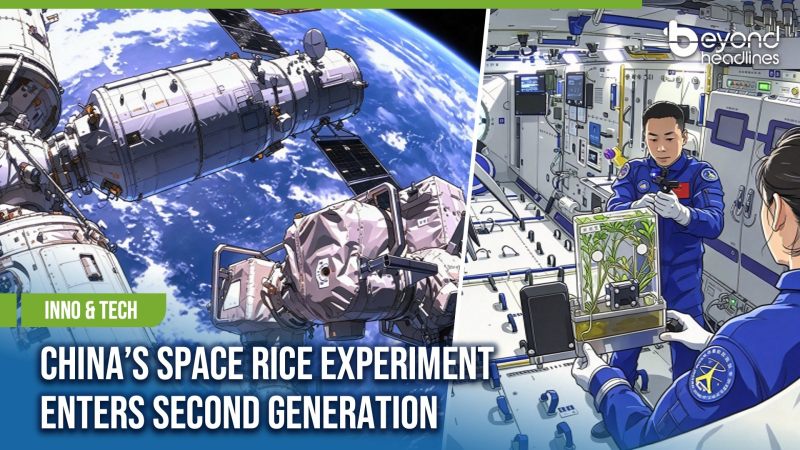


China has taken another step towards growing food in space, with astronauts aboard the Tiangong space station completing a new round of rice harvesting, sowing and sample storage as part of the country's first multi-generational space rice experiment.
In May, Shenzhou-23 carried ordinary rice seeds and third-generation descendants of those space-grown seeds into orbit. After more than four months, the crew has harvested the first crop and begun a second round of cultivation using two propagation methods.
The next generation is expected to mature during the Shenzhou-24 mission later this year, advancing efforts to grow food in space and support future deep-space exploration.
China began its space rice research in 2022, when the Shenzhou-14 crew completed the world's first full life-cycle rice cultivation experiment in space, producing 59 seeds.
The research aims to reveal how microgravity affects rice's genetic stability and adaptability over successive generations. Samples collected by the Shenzhou-23 crew over the past week will be returned to Earth for detailed analysis.